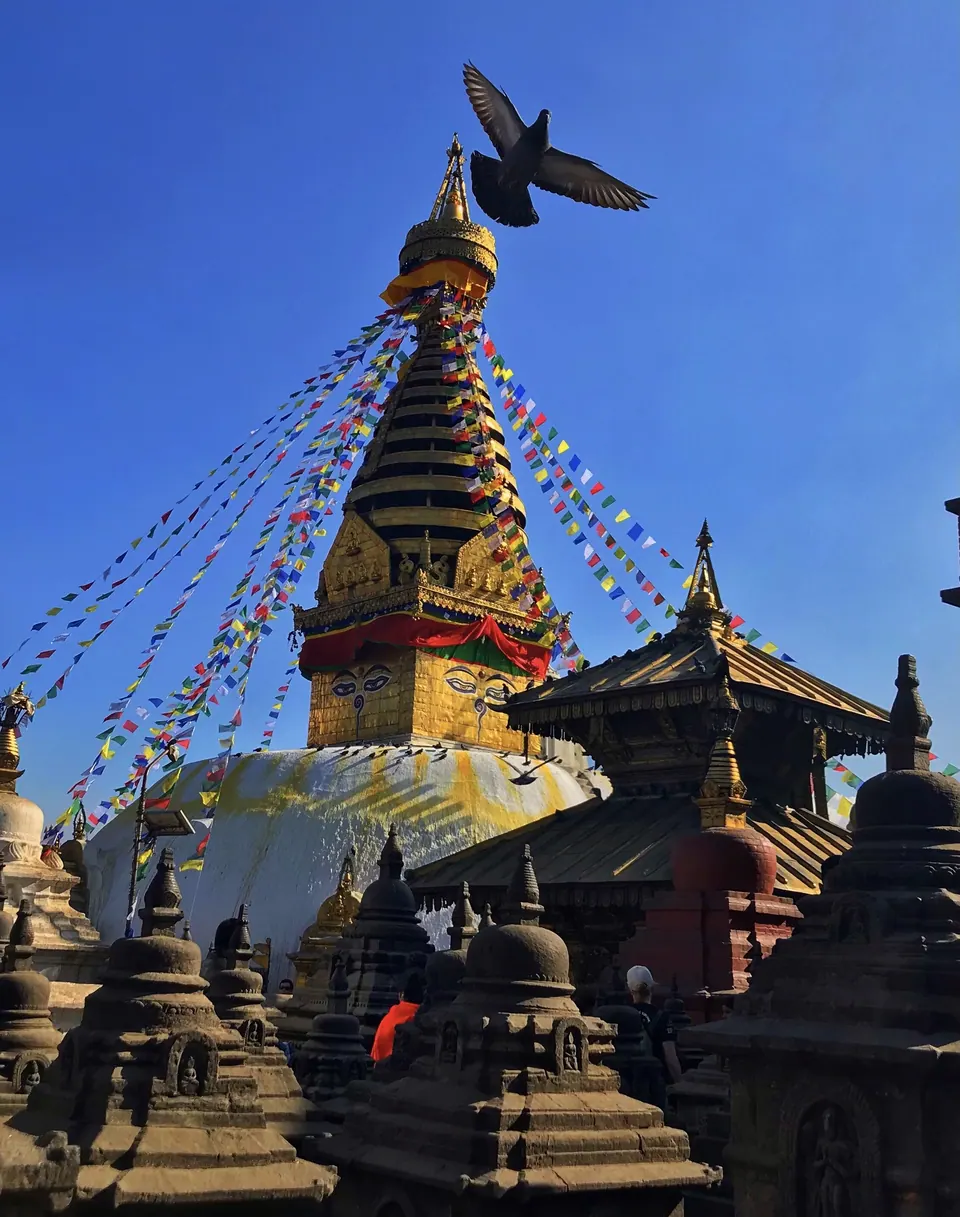
Kathmandu Valley is a dense cultural sanctuary where intricate architecture, spiritual practice and daily life remain entwined. Its seven UNESCO-recognised monument zones demonstrate Newari brick-and-timber architecture, metalwork, stone carving and the long synthesis of Hindu and Vajrayana Buddhist traditions.
The royal squares
Kathmandu Durbar Square preserves Hanuman Dhoka, Kumari Ghar and Kasthamandap. Across the Bagmati, Patan Durbar Square is celebrated for bronze casting, stone carving, Krishna Mandir, the Golden Temple and Patan Museum. Bhaktapur retains brick-paved streets, pottery traditions, Nyatapola Temple, the 55-Window Palace and Golden Gate.
Sacred places
Pashupatinath stands on the Bagmati as one of Hinduism’s most sacred Shiva temples; the river ghats remain active places of funeral ritual. Boudhanath’s immense mandala and daily kora are central to Himalayan Buddhism. Swayambhunath rises above the valley with a long shared Buddhist-Hindu history, while Changu Narayan holds Nepal’s earliest verified stone inscription and some of its oldest temple sculpture.
These are not static exhibits. Walk slowly, observe respectfully, and remember that courtyards, shrines and processional paths remain part of everyday worship.