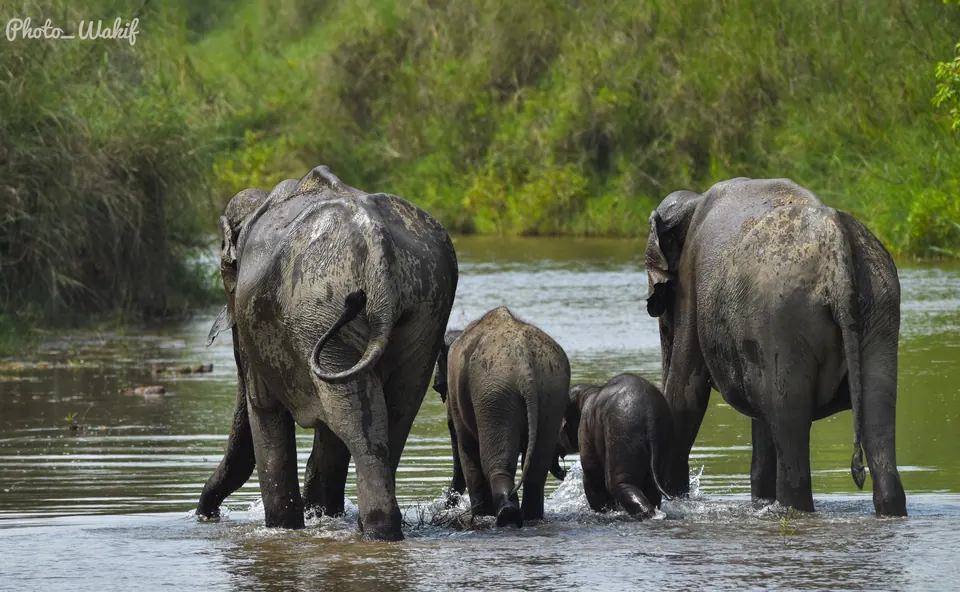
In the lowlands of southern Nepal, dense forests meet open grasslands, rivers and wetlands. Chitwan protects one of the country’s most remarkable wildernesses, with one-horned rhinoceroses, Bengal tigers, wild elephants, crocodiles, hundreds of bird species and countless other forms of life.
Chitwan is more than a place to see wildlife. It is a landscape shaped by water, forest and time - a place where every trail holds possibility, every sound carries a story, and the wild reveals itself only when it chooses to.
Ways to experience Chitwan
Explore core forest areas by jeep, slow down on a guided jungle walk, or follow animal prints and signs on foot. A dugout canoe on the Rapti River brings the riverbanks and aquatic life into view. Focused birdwatching, visits to the crocodile and elephant breeding centres, a night in a buffer-zone watchtower, and time in neighbouring Tharu villages offer different perspectives on the same living landscape.
A personal connection
There is something about Chitwan that keeps pulling Wakif back. After significant time in its forests and wetlands, each visit still feels different. The landscape changes, wildlife moves, and the forest always has something new to reveal. Chitwan teaches one lesson repeatedly: the wild cannot be rushed. You slow down, pay attention, and stay ready for the moment that arrives.
Reaching the park
From Kathmandu, a flight to Bharatpur takes roughly 20-25 minutes, followed by a 30-45 minute drive. The road journey along the Prithvi Highway to Sauraha generally takes around 5-7 hours by tourist bus, depending on traffic and conditions.