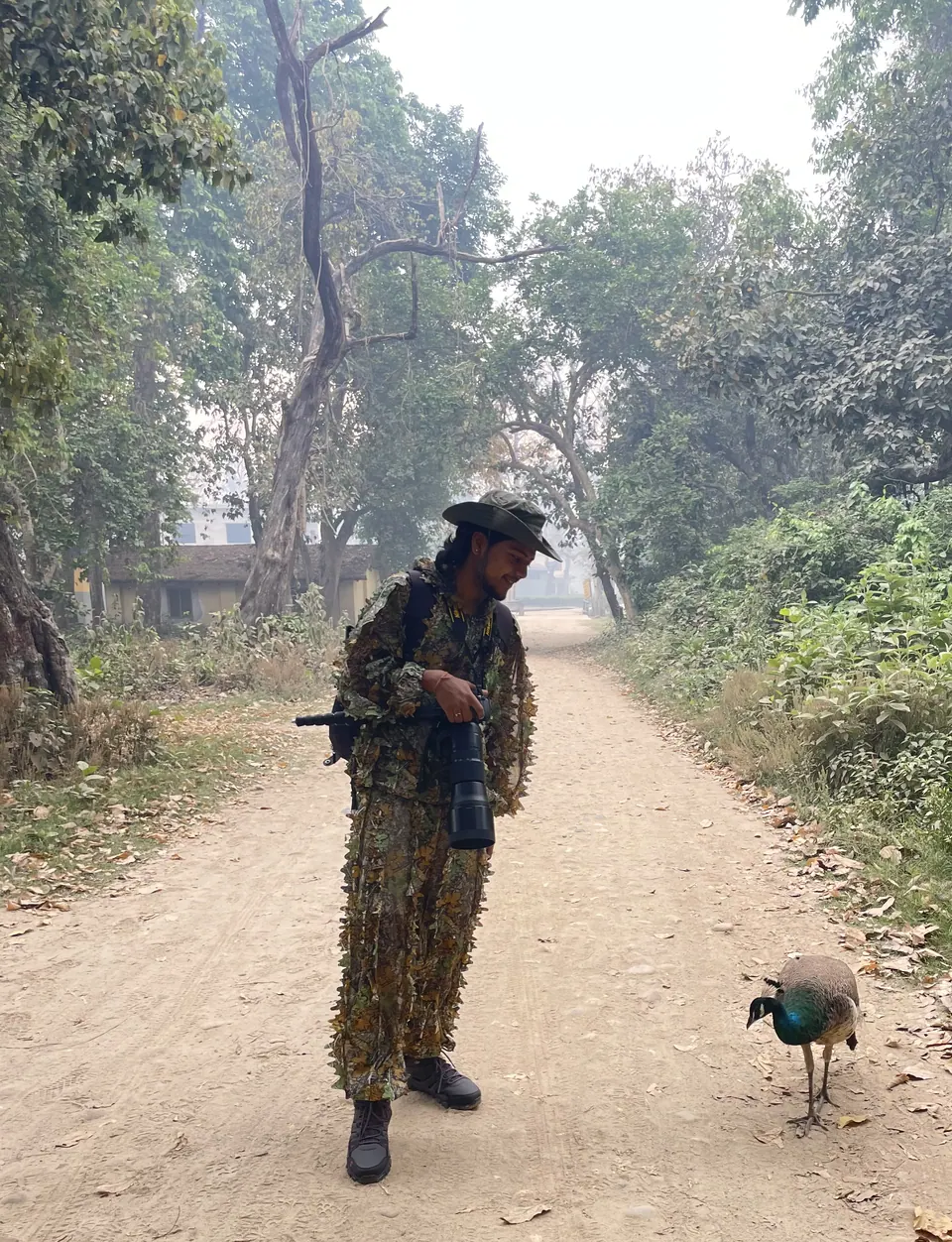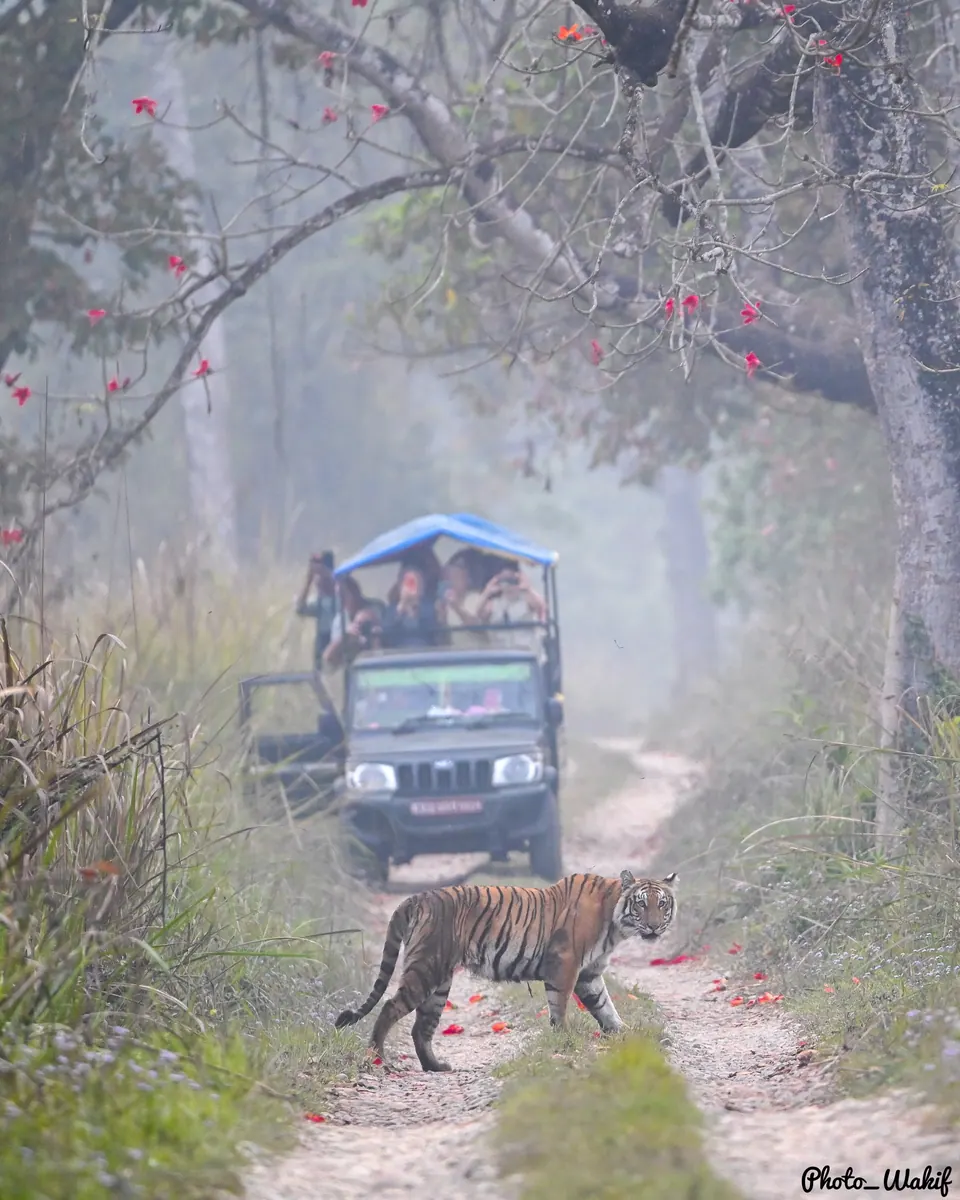
In Nepal’s far-western Terai, Bardiya protects one of the country’s largest and most remote natural landscapes. Its forests, grasslands, riverbanks and wetlands provide habitat for Bengal tigers, one-horned rhinoceroses, wild elephants, leopards, swamp deer, gharials and hundreds of bird species.
This is a place where the wild feels vast, quiet and untamed - where forests seem to stretch without end, rivers carry their own stories, and any journey may bring an unexpected encounter.
Ways to experience Bardiya
Jeep safaris reach remote areas such as Babai Valley, while guided walks and tracking focus attention on prints, calls and signs. The Karnali adds gentle scenic rafting, possible freshwater dolphin sightings and fishing expeditions for golden mahseer. Birding, the nearby Krishnasar blackbuck conservation area, buffer-zone camping and Tharu village visits broaden the journey beyond a single wildlife sighting.
Why Bardiya
Compared with more accessible Chitwan, Bardiya feels quieter, farther away and deeply wild. Its scale and lower visitor numbers create a greater sense of space, patience and discovery.
Reaching the park
Fly from Kathmandu to Nepalgunj in about 50 minutes, then travel roughly 75 km by road to Thakurdwara, normally 2-3 hours. By road from Kathmandu, long-distance services head west along the East-West Highway toward Ambassa; the final 15 km to Thakurdwara is completed by local transport or lodge transfer.